Showing posts with label Garments. Show all posts

Friday, July 27, 2012

Garments and Bangladesh

Garments factories in Bangladesh manufacture and design some of the world’s foremost brands in clothing and garments. Bangladesh presents a exclusive spirited edge when it comes to the clothing industry. Whether it is leisure wear or knits or spinning or weaving, the textile and garment industry of Bangladesh is by far its biggest export industry. The monetary value earned through exports by this industry was from $ 16 billion on the 2009-10 fiscal years.

Garments Worker


The Sector Highlights:
•    A positive trading status with the US and EU
•    A pleasant location for extension into the Eastern market and some other markets
•    High superiority products are produced on time
•    Highly skilled and dependable labor force
•    Large number of companies who provide a base for suppliers
•    This base has intensity in skilled labor and scientific abilities
There are a number of really feasible reasons to invest in this market. The growing insists for yarn is one of the reasons and profitable incentive correspondence are another important reason to invest.There has been considerable growth in the ready made garments sector from the last decade. This has induced the creation of a lot of new factories and more employment opportunities as well. RMG and knitwear currently account for closely 5,000 factories and comprises roughly 3.1 percent of the total workforce. It is important to note that 80 percent of this workforce constitutes women. Favorable trading rank:The fact that Bangladesh has trade agreements with 28 countries is one of the reasons it has such that a nice access to global markets. They are a really important supplier of ready made garments to North America and Europe. Bangladesh is anticipated to primarytain its tariff charge less access to the EU and Canada.
Historically, Bangladesh depended on imported fabrics and yarns and they have shaped about only 10 percent of the sell abroad quality cloth that has been utilized by the garment industry. There are great opportunities to set up composite textile industries that combine the three: textiles, garments and yarn.
Bangladesh authorities ropes of late associated with ready-to-wear garments staff member the particular earnings modification have previously obtained impact, the staff anticipate that this earnings increase 75% throughout 12,. Although labor privileges party thinks the newest salary nonetheless can’t keep associated with climb basic of just living expenditure, they believe that is in the direction of for that critical improvement in which Bangladesh ready-to-wear clothes worker fights pertaining to ft. in order to distribute a living wage.
Bangladesh authorities supports these days of ready-to-wear clothing staff member the fastidious wage modification have already taken influence, the staff assumes the earnings increase 75% within December. The job legal rights group believes the modern earnings nonetheless cannot keep involving rise basic of just living outlay, they think this can be in the direction of for your critical progress that Bangladesh ready-to-wear outfits employee spats for base in order to distribute an income.

Working in garments


Even in case Bangladesh ready-to-wear clothes producer and exporter connection destined to are not capable to stand brand new income framework recently, begins displaying brand-new national intercourse starting wage. This specific earnings modification will be the change reaching with this 6 the end of the a few months, years-es.
According towards the brand new deal, via from December A single, within the ready-to-wear clothes manufacturing facility nearly all the worker of the low level ― ready-to-wear outfits assistant, should be able to get corresponding to USD Forty three presently, wage modification is actually some over the last years-es for that very first time associated with earnings realignment. The Bangladesh Garment Manufacturers and Exporters Association are the apex trade body that represents the export oriented woven, knit and sweater garment manufacturers and exporters of the country. Ready made Garment is the leading sector of Bangladesh in terms of employment, production and foreign swap earnings. Ready made garment alone earned about 78% of the yearly foreign exchange earning of the country. About 3.6 million people are employed in the garment sector. The enlargement rate of RMG export was over 20% per over the last two decades.The Ready Made Garments industry has been the main source of growth in the export market of Bangladesh. It is also the foremost sector in employment generation.The direct contribution to national GDP from RMG is about 11 percent – comparatively small – but the industry plays a key role in employment to poorer areas of Bangladesh.The export-oriented RMG sector in Bangladesh started its journey in the late 1970s as a small non-traditional export sector. The RMG “boom” in Bangladesh began in the early 1990s, when free market oriented government policies and a variety of incentives to RMG producers first enabled entrepreneurs to invest widely in the sector. Throughout the 1990s, the RMG industry grew steadily, from 759 RMG factories at the start of the decade to 2,726 by 1998.
In September of 2008, the number of RMG factories in Bangladesh stood at 4,740, according to Bangladesh Garment Manufacturers and Exporters Association. After a few decades it became the major export revenue earning sector, employing the greatest portion of human resources working in the industrial sector of the country.

Female garments worker


In this sector, the factories have to maintain rigorous quality control over their product and safety measures for their workers. This includes like safe drinking water, medical facilities, and fire safety procedures. Additionally, in some factories there are rows of sound systems throughout the assembly lines of workers, from which music is played during the working hours to reduce the monotony of their labor.
Bangladesh for the first time has left Pakistan behind in exports as the former has surpassed an unprecedented mark of $24.3 billion during last fiscal year as compared to $23.6 billion figures registered on account of Pakistan’s exports.Exports of Dhaka, which remained historically lesser than the same of Pakistan, have now recorded the jump this year despite the challenges like inflation in the major importing market of Europe and other domestic issues. Though the total export figure of Bangladesh was still lesser than its fixed target of over $26 billion, it continued growth as compared to Pakistan’s exports, which declined by 4.71 per cent, as compared to last year’s figure of $24.8 billion. On the other hand, Dhaka succeeded to cross previous figure of $22.92 billion to $24.3 billion this year.
Both countries are largely based on textile exports and whenever there is a change in demand, supply and price of textile made ups in international market, total exports of the two countries accordingly.
According to experts, Bangladesh, comparatively relying more on textile garments, is enjoying the zero rated facility and tariff concession in global market specially EU because of its status as Least Developed Country
On the other hand, Pakistani products are facing high duties in the said markets. However, despite having at least 40 per cent share of non-textile item, Pakistani exports could not maintain the increasing trend after July to June 2010-2011 when Islamabad had pushed its exports from $19.3 billion to $24.8 billion with the increase of over $5 billion.During 2008-2009, 2009-2010, 2010-2011, Dhaka’s exports were recorded as $15.54 billion, $16.17 billion and $22.982 billion respectively. On the other hand, Pakistani exports during the said financial years were $17.69 billion, $19.29 billion and $24.81 billion, respectively showing an increase of 2 to 3 billion over the exports recorded by formerly East Pakistan.However, Bangladesh’s exports rose 5.9 per cent in the year ended June despite demand for garments from key Western markets remained waned. But the fresh increase was still nearly 8.4 per cent short of a target of $26.5 billion originally set by Dhaka.
Pakistan, which had also fixed export target of $26 billion keeping in view last year’s growth, remained much far away from the target. Bangladesh’s economy and exports have been boosted recently by a dramatic shift in global garment orders from China to lower-cost Bangladesh. Ready made garment sales for the fiscal year rose 6.56 per cent from a year ago to $19 billion.According to the Bangladesh knitted garment manufacturing and Export Association statistics, Bangladesh in 2010 to 7700000000 80000000 pieces of knitted garments total export volume, beyond the 7700000000 Turkey 40000000, in terms of number, has become the world’s second largest knitted garment manufacturing country.

Nice working Environment


During the second world war has entered the clothing market in Turkey, due to the high cost of labor and less receiving low order, so that the country exports 6900000000 of total amount 2000 Wanda card money ($1 72 against the Dhaka dollar about), on the amount, still exceed 6100000000 90000000 Dhaka dollars in Bangladesh.
Although Turkey as Bangladesh as the clothing market rival, but due to economic growth performance is good, has also become an important export market of Bangladesh garment.2009 accounting year, Bangladesh to Turkey garment export growth of 65%, 100000000 $8000000, that Turkey began to take safety precautions, the Bangladesh garments import product compulsory levy 27% protective tariffs.
The other entered the Turkey clothing market countries including India, Malaysia, still in Vietnam and Indonesia. As the total export volume or value of exports from mainland China in terms of total, knitted garments are ranked first.Because although the wage inflation and other factors and gradually lost competitive advantage, but at present still firmly in the world clothing market 50%Even so, BKMEA representatives still in Bangladesh market potential is great confidence, and said Bangladesh by 90 time enter the knitted garments market, annual achievement make a spurt of progress.Instead of growth being spurred by domestic demand, the rise of the RMG industry in Bangladesh can be ascribed to growing demand in developed countries for cheap apparel. Having said this, one should not forget that there was a small domestic garments industry in the – then East Pakistan (now Bangladesh) during the sixties which catered to the demand for apparel in the – then West Pakistan. The Mercury shirts, a company located in Karachi, sourced a few consignments of shirts during 1965-68 made by some tailoring outfits operating in Dhaka, and then exported these to some European countries. There were a few tailoring groups in Dhaka who made a small quantity of export-quantity shirts and children’s wear on specific orders. They received orders from
and supplied to Karachi-based firms 18. However, there was little investment in this industry during those days because of the very limited size of the domestic market. It was the global trend of relocation of production of garments from high-wage to low-wage countries, together with the bilateral MFA Quota system, that acted as the main driving force for the emergence and subsequent growth of the RMG industry in Bangladesh. Supportive government policies also played an important contributory role in this regard.
As noted earlier, it was the state trading agency, the The first consignment of private sector export of garments from Bangladesh took place in 1977-78 when M/S. Reaz Garments Ltd. exported men’s shirts worth 13 million French Franc to a Paris-based firm. At that time, there were only 9 export-oriented RMG units in Bangladesh. Along with Desh Garments, some other apparel-producing enterprises were set up in 1979, bringing the total number of firms in the industry to 22. By 1980, the number of firms in the industry
increased to 47, but total RMG export from Bangladesh was less than US $ 1 million . Despite the small export volume in the initial years, by the early eighties, the export-oriented RMG industry was well on its way to a historic place in the annals of industrial development in Bangladesh.


Tuesday, June 5, 2012

Garments in india

Garment concentration of India is a very old as well as many famous in a world. There can be find a huge series of layer exporters endangered in both beam of business. Garment awareness has approx 500190 million easy to get to yields usually in prior year. Garment has additionally been a pointer of enlightenment of multitude to live in. Attires come in differences with a disproportion of nation as well as state according to their culture. Garments play significant purpose to etch a individuality. These have been alien from different tools of a world. Due to chaotic module of peoples, they wish things by their single click. Garment exporters have been not as well most left during a behind in this panorama. There have been assorted beam directories accessible that can assistance to select most appropriate smart garments. Textile importers list their ultimate attires in these directories by you do lot of investigate per to a likes as well as dislikes of customer. They control investigate as well as investigate over a ambiance as well as direction of peoples per to selecting a attire. They additionally involves in stab to find ultimate trends from assorted countries. Now days, mantle exporters of India have combined a place in tellurium marketplace for their superiority, lure as well as resilience. This is due to a accessibility of rarely learned work in a country. There can be found sturdy ready made panoply importers as well as exporters jointly with from both tiny as well as vast scale. India has most appropriate place together with alternative countries similar to Korea, china, Taiwan etc. There have been sure manners that need being followed by mantle exporters. Having specific permit released by endangered management is a essential one. There has been additionally a little restriction for importers that can be traffic or product specific. Various products have been theme to product-specific standards as well as need to be upheld by germane certificates, product-specific licenses as well as correct documentation. Clothes sizes change from nation to country. Quntative restrictions as well as anti-dumping duties might additionally request in sure commodities. Trading of a little sell can be restricted but carrying sold license. Garments Importers need to aspire to a import procession as settled in a commandment. Indian wardrobe conform has good stroke via in a world, as any as well as each state have a own fashion. This is a critical avocation of weave importers to come with refurbish catalogue of conform all a time. Hence garments Textile Importers businessmen aspire to wardrobe regulations whilst preserving their amicable accountability.

Indian Garments


Vinegar offers an collection of clothes such as Casual dresses, luminary dresses, silk dresses, special arise clothing, women’s dresses, engineer dresses , marriage dresses, marriage gowns, dusk gowns, dusk wear, sundresses, bureau wear, Party wear, lively beverage dresses, review dresses, Beach Wear, Party Wear, official Dress as well as sundry designs of ladies Top’s, Short’s, Jackets, T-shirts, Skirts, Shirts, etc.
India textile clothing industry is facing further recession, the United States of America employment growth rate and the European debt crisis on India garment export adverse effects.
India is the EU’s fourth largest garment import foundation, 2011 India lost the European Union garments amounted to $4630000000, fall in mainland China, Turkey and Bengal, EU imports accounted for the proportion of gross from 2010 6.
75% up to 2011 6.83%The EU growth has resulted from increased exports of woven garments, knitted garments is flat without growth. The 2011 EU clothing import quarterly analysis first quarter of substantial growth, 20.6%, fourth quarter down to -3.8%; resulting from mainland China and Turkey imports of clothing from the first season increases 25.3%, the four seasons of recession of -7.7%overall, 2011 the EU since the global attire imports of woven garments, knitted garments in India is slightly increased, the unit cost than global average cost is high 34%, Bangladesh unit cost 2 times, Chinese mainland 1.
5 times; the most obvious one is woven garments units into the Bangladesh high out more than 2 times, the import market share accordingly by its surrounding poorer countries seized, most EU clothing import source countries, including China and Turkey, both face high unit cost of a woven garments knitted garments, but Meng Jia took exception to mainland China, Bangladesh, Turkey and captured India loss proportion.
The United States of India to the United States garment market, the sixth largest source of imports, India in 2011 clothing exports to the U.S. 3300000000 dollar, grow 6.5%, in the United States imports 4.
27% market share, in mainland China, Vietnam, Indonesia, Bangladesh and Mexico, India in the United States import market share of 2009 to 4.51%, 2010 to 4.36%, wherein India strand system of clothing exports to the U.S. $2700000000 for the largest, as fiber system of clothing five times. India cotton garment exports to the U.S. in 2011 2010 the amount of slow growth, increase the number of 1.6%, 12% less, plateau were mainly cotton price upsurge to place an order to fiber clothing buyer.
The second half of 2011, India rupee against the dollar has depreciated, a dollar rupee 44 yuan, down 18%, a dollar depression of the rupee 54 yuan, exports to India cost competitiveness does assist, but also push all imported products rise in price pressure, in March an inflation rate of 6.

Indian garments worker


89%, in spite of the ease but still belong to the emerging economies of the inflation rate the highest and fastest rising country, since January 2010, India’s inflation rate has been in the 8-11%however, the export market, in Southeast India are facing new competition, Bengali population and economic dimensions only accounted for India’s 1/8 and 1/15, but the clothing exports are India, Bangladesh, labor is abundant and the cost is low, foreign investors from mainland China and other Southeast Asian countries into Bangladesh target, aiming at India market.India Special Economic Zone garment exporters to inquire the government to reinstate to the original garment ParkIndia Association of Surat clothing Garden Park is a top exporters of garments trade organization, the organization sent a letter to the state and central government, requires special economic zone back to the common Surat apparel park.Due to the global economic slowdown, the special economic zone of the garment export enterprises exit is depressed, the results, when the company established targets have not completed. This is the first of its kind in South Gujarat Special Economic Zone, approximately 11 a clothing exporter said, because of the lack of orders, months to complete statistical target, be forced to close down the enterprise.
In 2006 the Surat apparel park was converted into a special economic zone, so far, in the 128 regions, only 66 sold, of which only 11 units in operation employed approximately 3000 people per year, and his 8 units under building.
The 11 units have been invested about 1950000000 rupees, for nearly three years, textile park overall export only 600000000 rupees, which is the exporter requests revocation notice of particular economic zone is the main reason.
The Indian economy is now been measured as the 4th largest in terms of economy and purchasing power parity and so it is just after the USA, China and Japan in the ranking system. The growth has come due to the consumer in Indian market who has made the increment in the consumption rate for the Indian Garment Industry and other industry possible. The growth of expenditure is more than 50% of GDP and it is growing every day. There is a strong base for the production of raw materials and there is a huge labor base in the market – both skilled and inexpert labors that can be cheaper than other market. This has helped in the growth of the industry.The main sector of the Indian industry is the textile industry and this has opened up India to become an Apparel Exporter too. The clothing Export Promotion Council reports that the exports have reached $12,145 million in the recent months and the growth is good for the industry and is revealing a profit margin which is more than the profit earned last year. The growth of export is 1.5% more than the export of the last year. In terms of money, the growth of export is 9.8% more than the matching month of the last year export. This is mainly based on the report for the month of February 2012.

Garments worker


The textile or the apparel industry is a varied source of growth and covers different types of resources. The hi-tech fibers and woolen fibers, cotton and other such fibers all have their own share of participation towards the growth of the market for the apparel industry. The different end products give us varied structures of the market. The Indian Garment Industry is growing at a faster rate since the last few decades and now the growth has accumulated a faster momentum and the market is optimistic about the different positive effect it is creating for the market players. The apparel from Indian market has made a enormous market in markets of the countries like Britain, America and other East Asian countries.
The export of the garments from Indian market is nearly 30% of the total export taking place and the sector covers 14% of the industry and has turned out to be the second largest source offering employment to the population. The Apparel Exporter helps the people to alter their lifestyle to a better standard and the industry becomes a self-reliant field for the country can find a proper market for raw materials and labor in the local and international market. This sector is providing a large growth with the resources that are available within the country and thus making the rate of growth better and faster.
India Garment Export Promotion Council is expected to grow 50% garments export to Japan
India and Japan signed the historic comprehensive economic partnership agreements .India Garment Export Promotion Council chairman Shri Premal Udani to Shri Anand Sharma congratulated the Minister of Commerce and industry.
CEPA India is signed with the Japanese the greatest agreement, Japan’s GDP for $5.According to the agreement between Japan and India, about 94% of the tariff will be abolished within 10 years .CEPA negotiations in 2004 November, after 14 rounds of negotiations, in 2010 September reached an agreement in principle. February 16, 2011 signed a historic agreement. Shri Premal Udani said to CEPA, due to the signing of the agreement, the India Clothing Export Promotion Council on 2009 & 2010 Tokyo International Fashion Fair held a large display of clothing.CEPA was the two grand meeting has been organized on a fashion show, India garment potential prediction. At present India garment exports to Japan for $125000000, almost by the knitted and woven apparel go halves on a fifty-fifty basis. India garment exporters in support of the government and Japan signed a trade agreement.India garment exporters are eager to welcome the February 16th India government and Japan signed the comprehensive economic partnership agreement (to promote trade with Japan.
Print CEPA India signed trade agreements will be one of the largest, in India and Japan in stages between goods trade tariffs and service areas of bilateral trade liberalization. According to the agreement, both sides trade totaled approximately 94% printed items in the agreement comes into effect 10 years gradually lowered to zero tariffs; and all ownership of Customs Tariff sixty-first and 62 chapter of knitted and woven garments products, to the date immediately remove tariffs agreement.
India Garment Export Promotion Council data shows, last year India garment exports amounted to $125000000, for Japan the fifth big clothing supply country, exports of knitted and woven garments each half, including artificial fiber dress to export quantity and the amount of calculation, is the single largest export item.The chairman of the AEPC PremalUdani believes, exported to Japan India clothing in the removal of about 11% of the import duties, will likely rise nearly 50% increase. He also said that, AEPC plan in July this year, held in Tokyo International Fashion Show, and has visited the main buyers, such as the Uniqlo brand informal apparel company Fast Retailing.Indian designers have already marked their prominent place on global fashion market.  Exotic designs developed by designers have created a great impact on uplifting Indian clothing trend in world. These designs have augmented the suitability of Indian clothing in the international textile market. Today, indo-western fusion clothing is one of the highly demanded garments across the world. Western fashion trends have already started to incorporate Indian fashion designs to their dress wears.  As time goes, Indian clothing trend continues as an developing subject. Also, you can certainly watch polishing of old style through vivid trend cycles. For example, apparels popular in a specific stage of time changes with fashion and time.


Wednesday, November 9, 2011

under garments

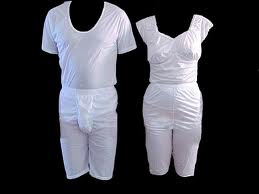
Nobody in fact likes to talk about their underwear, and Mormons most likely have better reason than most to be reserved. They don't even call it "underwear." The term they prefer is "garments," which is in use from the King James Bible, and gives these scraps of white cloth a formal name to go along with the vaguely talismanic character they grasp in the Church of Jesus Christ of Latter-day Saints. They don't look like anything special: a white T-shirt and boxer briefs, slightly longer than standard, characteristic in nothing much but their flush and the fact that all adult, devout Mormons, men and women, be dressed in them.
Mormons don't use the word "underwear" to converse about their garments, and they surely don't use the word "magic," or actually consider that garments have any particular powers to stop bullets or stay them from getting sick or serve as a sort of nylon-and-cotton flame retardant. There are stories of some of these belongings, like there are stories of the relics of Catholic saints curing epilepsy or blindness, but to most Mormons these are faith-promoting rumors, evocative but archaic folklore. The garments are a sign of dedication, a marker of faith, to be respected for the same reasons that it's considered rude to burn a Koran, but barely mystical.

Under garments


When confronted with raised eyebrows, Mormons frequently point to Jewish yarmulkes and tizzy, or the communion dresses of wide-ranging children, or the turbans of Sikhs and collars of some Christian clergy. Sacred clothing is hardly an innovation Joseph Smith came up with, and surely mockery of a yarmulke or a Sikh turban would be horrifying and verboten in most of the tolerant Western world, even in the genealogically Protestant United States, where "religion" is supposed to be amazing that you believe, not something that you wear, and sacred clothing seems strange and exotic. But, of course, Mormon garments are underwear. In the resolutely public world of modern America underwear is rather less dignified - and more chuckle-inducing - than something you put on your head.  Mormons know this. Many of them discover the garments as awkward as any other American might. They are manufactured by the church, and particularly for women, wearing them can be a chore: the cut might be slightly off, or the bottoms baggy, or the collar rubbing. And, of course, garments mean that wearing a sleeveless dress flashes your underwear to the world, which is trying in Texas or Arizona. In the past forty years or so, covering the garments has become a marker of diffidence for Mormons, particularly women, and sleeves are therefore necessary. Combine that with the scoop neck garment shirt that many older Mormon men motionless wear and you can usually choose out Mormons on vacation in Florida.
Except for changing it often, my mother never told me what to do with my underwear. Probably because I am not a Mormon. Thank decency for that. The Mormon religion however, has an entire set of rules about that stupid issue. They look upon their under drawers as religious items that have to be worn, or else … no one is sure precisely what the “or else” entails.

Nice garments


There is cause for a likely conflict of interest. The underwear can only be purchased directly from the Church commissary. Even Sam Walton and Wal-Mart have been shut out of the market.
The plus side of the undergarments, as Mormons prefer to call them, is that they are said to protect the wearers from temptations and evil things. Gods will Ministries have not verified whether they are bullet proof, although traces of Kryptonite have been found in cloth samples. The underwear is said to keep Mormon chicks modest. It seems that not all Mormon females wear the sacred, secret duds, as a number of extremely hot; boastfully dressed Mormon chicks have been noted. Mormons are required to wear their underwear at all times, for their entire lifetime. No mention is made about ever changing them. This may deter many from joining the church. Also, it is not certain if the garments can be removed when engaged in sex, especially with an atheist. Once we get past the sniggering, Mormon underwear presents a fascinating site of study. Why are they worn and what do they represent? The answers, I suspect, differ really depending on who is talking. Anything that is so obviously personal, so close to the body, will undergo continuous transformation and be constructed in ways that ecclesiastics will never capture or admit. Whatever the official explanations or rationales, I’m sure they are less rich than more personal understandings. I’m also confident that garmies work on levels that Mormon leaders may not fathom. To give but one example, garmies fit nicely into the costly signaling theory of collaboration that is vogue in evolutionary studies of religion.
Mormon doctrine and academic theory aside, we can get some sense for the myriad customs Mormons perceive garmies in this pleasant piece by Valerie Tarico. Judging the symbolic possible by remarks from various garmie wearers past and present, I can envision an entire cottage industry for cultural anthropologists similar to that which surrounds Islam and the hijab. The difference, of course, is that garmies don’t provide a rich field for fashion, commodity, or authenticity analyses. This is not to say that garmies have not changed over time. As this LDS chart shows, they have:
It is to say that garmies, in spite of the challenging re-design and sales efforts of Mormon’s Secret, probably won’t be a fashion or identity statement anytime soon. But as Tarico recounts, garmies could become popular for other reasons:
In Mormon folk religion, Garments have particular powers. Stories are told of wearers being saved from bullets or a fiery death in a car crash. One story tells of a Mormon warrior during WWII who was killed by a Japanese flame thrower – but his Garment survived intact. The stories go back to Joseph Smith himself, who died in a hail of bullets without his Garment on. His friend, Willard Richards, who was trying his, emerged unscathed. Mormon historian Hubert Bancroft described the incident in his 1890 History of Utah: “This garment protects from illness, and even death, for the bullet of an opponent will not penetrate it. The Prophet Joseph carelessly left off this garment on the day of his death, and had he not done so, he would have escaped unharmed.”

Comfortable garments


Bancroft’s 1890 story about Joseph Smith and his bulletproof garment raises an fascinating opportunity. Two years earlier, in 1888, the Paiute prophet Wovoka revived the Ghost Dance and began hosting Native American visitors from around the country at the Walker Lake condition in central Nevada. In 1889, the Lakota shaman Kicking Bear visited Wovoka on behalf of the Sioux. By the time Kicking Bear arrived back in South Dakota, what would become the Sioux edition of the Ghost Dance had become more millenarian and militant. Kicking Bear told Lakota warriors that if they wore particular shirts, bullets could not harm them. Tragically, many Lakota discovered otherwise at Wounded Knee in 1890.
To outsiders there is little more charming about the Mormon religion than the underwear that Mormon temple initiates are expected to wear day and night. As one previous supporter put it, “I’ve been an exam since 1967. All that time, the underwear questions were the first ones I got from people who found out I had been Mormon.
A Mormon woman describes what happened when her husband told her that he had stopped believing in god. It is a moving story of the tensions that can arise flanked by believers and non-believers in the same family.
But despite the story being a serious one, there were some passages that made me laugh out loud, as in this one about what pressed her over the edge and made her decide to confide in a Mormon neighbor about her husband’s apostasy.
When Sean replaced his temple garments — the sacred underwear he’d promised to wear day and night — with boxers, I couldn’t take it anymore. It was too much betrayal. But her Mormon neighbor and the church could not help her and as she too slowly relinquished her Mormon faith, the couple discovered some advantages to abandoning the Mormon lifestyle. Whoa, we suddenly have 10 percent more income. Whoa, our weekend free time just doubled. Whoa, we can try alcohol, coffee and tea — the trisect of forbidden drinks. And for her to the final sign that she had left her Mormon beliefs behind involved changing her underwear. When I shed my garments for greasy Victoria Secret panties, my self-esteem skyrocketed, and our late nights shifted to other things. Editorial cartoonists have a tradition of drawing politicians in their underwear.  President Clinton is often drawn with his pants around his ankles and boxer shorts with a pattern of little hearts.  The same treatment is due for chronological adulterer politicians like Newt Gingrich, Arnold Schwarzenegger and too many members of congress to list. Even Batman and Superman wear their underwear on top of their tights.  As a leader cartoonist, I cherish my right to draw anyone I want in their underwear. Mitt Romney is a little dissimilar. He doesn’t seem to be an adulterer, and is certainly no superhero. As a devout Mormon, Romney is supposed to wear religious “garments” as his underwear, and I assume he does although he refuses to answer questions about his underwear. If Romney would talk about his underwear, I would be less motivated to draw him in his underwear; Romney’s “garment” silence interests me.  Here are a couple of my cartoons with Romney wearing his Mormon “garments.” I have gotten a bit of flack from readers about drawing the mysterious underwear on Romney, but not as much as I anticipated, and I’ll keep drawing him this way at least waiting he talks about his underwear. Deprived Bill Clinton will continue to be haggard in his underwear whether he talks about it or not.

Thursday, September 15, 2011

Garments in Srilanka

Who knew that SriLanka was in the business of moral apparel manufacturing?  In fact their government backed initiative call “Garments without Guilt” is their native deal connection Sri Lankan Apparel’s biggest endeavor for garment manufacturers.  It seems that they have been working with the International Labor Organization in signing the 31 Conventions of the ILO and being the only country to do so.  These conventions list some of worst offenses to workers that would be denounced by factories who sign it.   This is a vast step by an Asian garment manufacturer where bottom line is more precedent than human rights.  Sri Lankan companies like Brandix are in the forefront with this movement to be leaders as powerful and honorable employers. Brandix currently exports 60% of its contracted apparel to the U.S.   Though, it is outsourced it has better reliability in product ethics than other counterparts in the outsourced market.  They seek a competitive benefit over other manufacturers by running efficient, resourceful, sustainable businesses who do not exploit its labor for profit.  Sri Lankan’s model is supplier driven as many apparel manufacturers are following the buyer’s trend for more companies that are ethical in their business practices.
Brandix, one of the biggest garment manufacturers in Asia and the largest in Sri Lanka, recently installed Tukatechs apparel software system thereby noticeably improving the capability of their product development and manufacture. TUKA systems were initially tested by Brandix Denim division and showed dramatic results in the quality of patterns and the speed and efficiency in which they were produced. We are now getting more than twice the production of patterns that fit the first time, saving a large amount of fabric, and better utilizing our human resources. These changes motivated us to look at TUKA systems for our company, said Iswaran Senthil, CEO of Brandix Denim. Besides providing us with CAD-CAM systems, Tukatech offered valuable consulting, engineered the work flow and the pattern room, and even increased productivity in our cutting rooms. Though they had invested a significant amount of time and manpower into their previous CAD system, Dhananjaya Rajapaksha, CEO of Brandix Casual wear, could not ignore the incredible changes made in the denim division, and decided to move forward with Tukatech.
Tukatechs team provided in-person maintain to create the transition between CAD systems as easy as possible and worked with the staff of Brandix to customize the system to their specifications. Tukatech CEO Ram Sareen sent his technical team from the United States and India to our offices, and many of our requests for what we wanted to see in the software were accommodated.

Garments worker


Tukatechs team worked with us and we had a very fast completion. I have a lot of years of knowledge, and I know what my team needs. Tukatech was able to give us exactly that, said Thushad Saumydasa, Head of Product Development.
Brandix Casualwear, primarily a producer of women’s bottoms and very technically complicated products, had seen many of their customers shifting their business out of Sri Lanka to countries where garments could be produced at a cheaper price. Dhananjaya knew that in order to stay competitive, he would need to increase the efficiency of his operation by 1/3, and Tukatech helped him meet his goal.
Since the installation, Dhananjaya and his staff have uttered their approval with the system, saying that it has automated much of what they once did manually, despite the fact that prior to installing Tukatech they had other CAD software, and they further stated that TUKAcad has broadened the use of CAD software throughout the company.Today, our people are using Tukatechs CAD to a much larger extent than they were with our previous CAD system, said Thushad.The feedback I’ve gotten from my managers is that the new Tukatech system has more functionality compared to the previous CAD systems they had and it is much easier to manage and use, said Dhananjaya. The most encouraging thing I’ve heard from employees is the way that the implementation of the system was handled. Tukatechs interactions with our technical team were very beneficial. They listened to what we do and customized the systems to our needs. Many of our requests regarding the software were addressed during this period.I see vast development, said Thushad. With Tukatech, everything is automated and very accommodating. Many things that I used to do manually are now automatic, and that means I can direct my attention to other matters.We are in the fashion apparel industry, and style keeps changing fast. We have to also be fast, said Dhananjaya. Tukatech allows us to be faster, more efficient, and ultimately improves our bottom line.
Brandix Casualwear forms the center of the Brandix group, and provisions woven bottoms, basic pants, cargo pants, 5-pocket jeans, shorts and skirts to the world’s top brands. Its seven production facilities include a state-of-the-art, fully automated denim facility which is the first of its kind in Sri Lanka. Adding yet another landmark, Brandix commissioned its Green Factory in April 2008, setting a new benchmark as the first one of its kind in the country.

Srilankan garments


The actual garments sector inside Sri Lanka goes by the particular Pick up Hui method of buying EU+position however go through an advantage, United kingdom elegant specialist David.Orchid gold your garments source within Sri Lanka association the particular Nineteenth century annual meeting upwards declare.
The clothes market within Sri Lanka goes the Pickup please Hui system regarding acquiring EU+position however encounter an improvement, Uk luxurious professional Bob.Orchid rare metal the actual garments resource within Sri Lanka organization the 19th twelve-monthly convention way up point out.
Lan Jin announced, in accordance with the Pu Hui system regarding EU+position, your dissolving involving income via duty special discount includes a liking with regard to attend your clothing section for you to Sri Lanka and get clear effect. This can pass Sri Lanka regarding Some, 500, Thousand, 1000 your apparel having no export European union, including The united kingdom, in the actuality demonstrate.The fiscal problem that will part of European countries nations take position decreases the acquisition firm’s buying electrical power, yet has not motivated the actual apparel regarding Sri Lanka about bat roosting dispatching regarding region. Even so, the actual responsibility problems will cause to produce business along with outdoors in order to cover your colleague’s income constringency.Lan Jin says that even though negative circumstances, Sri Lanka remains the main source of turning out to be EU, the usa along with Asia top quality cost, advancement along with sensible shop price garments product, and can continue to consistently infiltrate. Therefore, to be able to Sri Lanka must always preserve with each other these efficient enterprise commission rates inside the land.
Orchid gold reference, Sri Lanka may possibly once more discover the Pickup Hui method regarding European concession, yet he clarified, up to now, government throughout Sri Lanka whether determines to meet the particular request in the Pickup please Hui technique, yet again put forward to try to get element never have manufactured selection.Colombo, Sri Lanka- On Friday, November 18, the Sri Lanka Design Festival hosted the South Asian Leadership Forum at the Mount Lavinia Hotel in Colombo. The forum, which culled together local and international leaders in the garment industry to discuss Sri Lanka’s place in the global marketplace was one of the key events of the Sri Lanka Design Festival, a showcase for the Sri Lankan fashion industry.

Good Working environment


The South Asian Leadership forum, which featured four sessions and a number of guest speakers, focused on Sri Lanka’s evolving garment industry and its place in the global marketplace. Each session was hosted by a different moderator, and the panelists fielded questions from an audience composed of the garment industry’s leading thinkers. The forum was hosted by Mike Todaro, Managing Director of the American Apparel Producers Network, who frequently offered his insight into the discussions. Panelists included local business leaders and international guests from India, the UK, France, Germany, Brazil, the United States and many more countries.The four sessions covered such diverse topics as the shifting global apparel market and economy, strategies for continuing and growing Sri Lanka’s strong garment production, new design and manufacturing technology, and the country’s leadership in sustainable production.  Each session featured unique moderators and panels, including manufacturers, retailers, designers and educators.One of the key topics discussed at the forum was Sri Lanka’s growth in the worldwide apparel market, and what path the nation’s manufacturers would decide to take. Many at the forum were wary of offering cheap services while they could as so many other countries have done, and instead opting to give high quality work using sustainable and ethical business practices.Though only the fourth session was initially focused on sustainable and “green” manufacturing in Sri Lanka, the eco-friendly business practices of the Sri Lankan garment industry was a theme that ran through the entire day’s discussions. Panelists and audience members agreed that Sri Lanka was setting a global example for sustainable garment industrialized, but more needed to be done throughout the fashion industry on every level.The marketing of Sri Lankan garments was another large topic of discussion. In addition to spreading the word about high-quality, low-environmental impact garments produced in the nation, many panel members and attendees thought that a marketing or advertising campaign directed at both the industry and clientele in general could be of tremendous benefit to Sri Lanka’s industries.
Ram Sareen, Founder and Head Coach of Tukatech, described Sri Lanka as the best kept secret in the garment industry, and several other panelists considered ways to raise the country’s profile on a global scale. Both Ram Sareen and Mike Todaro cited the example of Columbia’s Juan Valdez icon as an example of what can be accomplished with the right marketing campaign.
As part of the focus on excellence rather than affordability, one of the panels spotlighted the role of new technology in both the current marketplace and the creation of new ones. Several new technologies for design and production have radically altered the garment production landscape in the last few decades, and Sri Lankan companies have been among the quickest to adopt, adapt and innovate.
Arshad Sattar, Managing Director for the Timex Group of Companies spoke at length about his experience using Tukatech’s TUKA3D and e-Fit Simulator while developing products to meet his customer’s time and quality expectations. He also discussed using Tukatech’s 3D technology, via Styku’s online fitting room and low-footprint in-store body scanners as one of the key elements in the achievement of his company’s growth into retailing and the creation of their own brand.
Finishing touches from the system involving The Japanese is really publicized enterprise European Union and also Country tariffs the actual tsunami wounded relating to Sri Lanka, Australia, Indian, Thailand as well as Maldives Hawaiian islands right at the end attached preceding calendar month. European may possibly speed up setup of that advanced GSP business that might exist calm methods amidst starting place to be able to variations exporters just about any more and more third world international locations. The safest internet personal loans for any need Your fees is introduced in the usa The nation’s lawmakers noisy . January looking for the new accountability-free while using the United States industry for numerous China, primarily Sri Lanka and also Belgium.While textile and products businesses has not been merely by their particular tsunami the belief that on an emotional level vulnerable relating to Sri Lanka, Indian, Thailand Australia towards the end out of December, sounds are getting recognized needing America as well as the Eu in order to reduce importance requirements on hat from the line Hard Anodized Cookware locations.es.
low awareness right after staying away through textile amount calendar year, businesses regarding The Japanese would need the exacting increase to engulf effect from the tsunami in your a number of professional areas, fundamentally vacationers.European Union’s Commission payment just avowed which experts point out apparel acquired through Sri Lanka is actually without question given an excellent accountability-free employ in the occasion the emerging GSP styles might be productive.Your job-free solutions may probably be promoted in the variety of other GSP-+ style may well open to relatively inferior international locations that ok’d bounty conferences as a way to labor and in adding environmentally helpful specs.